Miwako was born in Tokyo, but most of her childhood memories are rooted in the countryside of Chiba. Surrounded by rice fields and the sound of frogs at night, she remembers a relatively carefree upbringing - running through open land and chasing butterflies. As the eldest of two sisters, she grew up in a household where hard work and stability were central. Her parents worked tirelessly to provide their children with opportunities, including funding her education and supporting her move abroad.
At the same time, that dedication came with sacrifice. Her father was often physically absent due to long working hours, something she now recognizes as part of a broader work culture in Japan, where twelve-hour workdays are not uncommon. Despite this, Miwako speaks with gratitude about her upbringing and the foundation it gave her.
From a young age, she felt a strong curiosity about the world beyond Japan. She wanted to explore other cultures and ways of living, even if she did not yet know exactly what that would look like. Socially, however, she found certain aspects of life in Japan challenging. She describes herself as shy and introverted, and uncomfortable with strict social hierarchies.
At the time, Miwako was unaware that she has autism. Looking back, she understands why navigating daily interactions felt difficult. In Japan, social communication often relies on unspoken rules and subtle cues. Knowing when to speak, how to introduce yourself, how to behave in group settings - these are not always explicitly taught, but they carry significant weight.
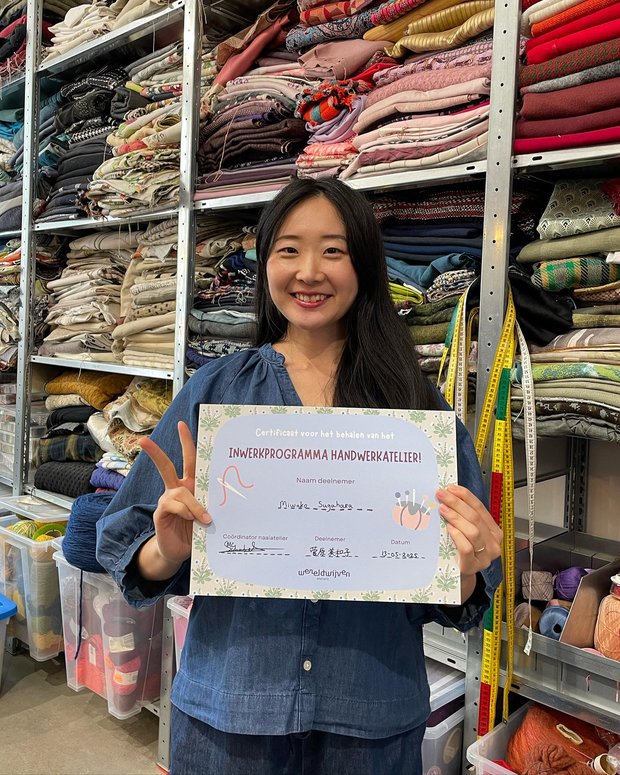
Portret van Miwako
2025
Negotiating identity and belonging
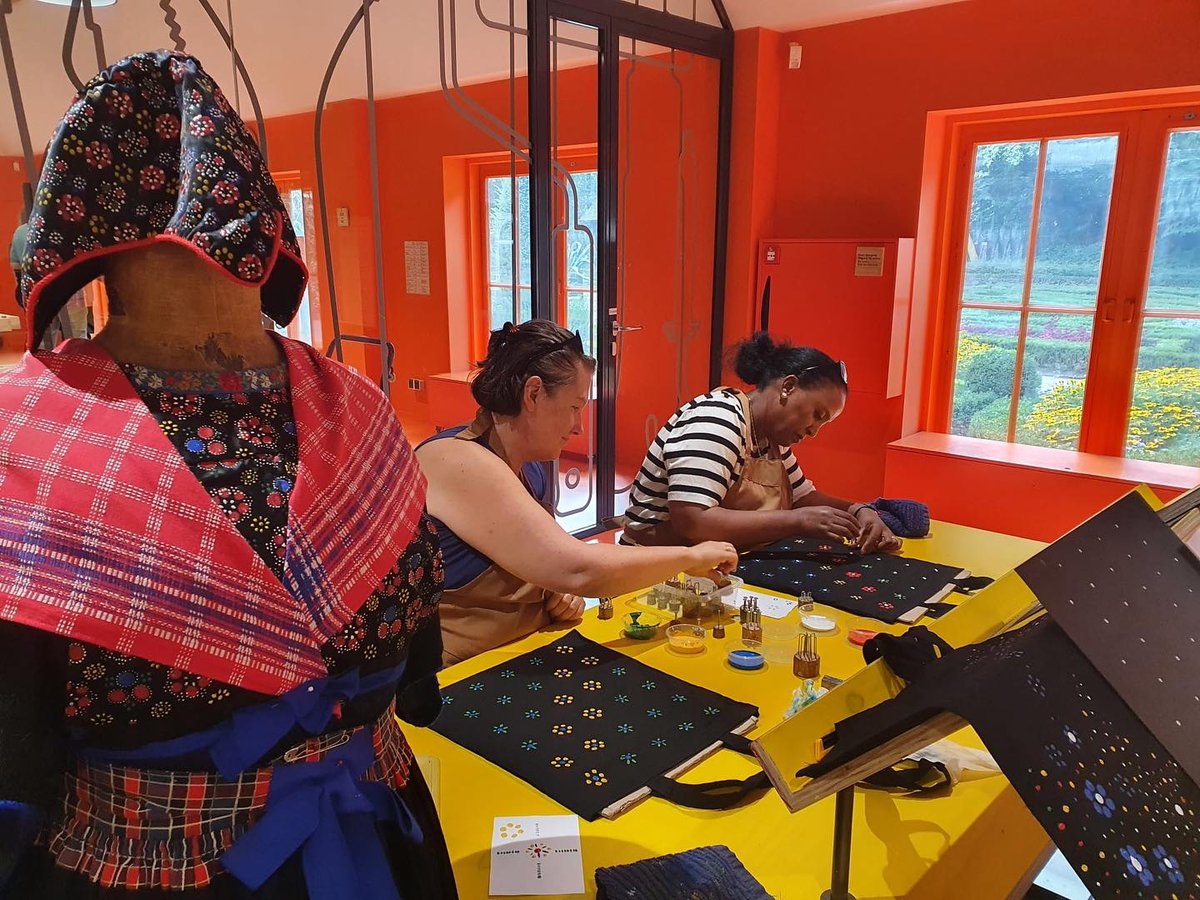
Vrijwilligersuitje van de Wereldwijven Ateliers bij het Nederlands Openluchtmuseum in Arnhem.
2025
For someone who struggles with reading social cues, this can create constant uncertainty. Miwako explains that it often felt like walking on landmines and making mistakes without understanding why. Because of this, she sometimes felt she could not fully be herself. Rather than staying in an environment where she felt out of place, she decided it was time to look beyond it.
That decision led her to Ireland, where she pursued higher education and eventually began working. Moving to Europe brought both opportunities and challenges. On one hand, it allowed her to explore her identity more freely. On the other, it introduced her to cultural differences that were not always easy to navigate.
One of the more unexpected challenges was dating culture. Miwako describes it as confusing compared to what she was used to in Japan. There, romantic intentions are typically communicated clearly. At a certain point, one person explicitly asks the other to become their partner. In Ireland, she found that interactions could be more … ambiguous - conversations, flirting, and spending time together did not necessarily mean one intended to commit, and even if a relationship arose, it did not mean monogamy.
After a difficult romantic experience, she became more guarded. She put emotional boundaries in place and focused on her work. It was during this period that she met her current partner, Jouri. They worked in the same office. On the question whether it was love at first sight? She says not quite. But attraction at first sight? Most definitely. But Miwako did not act on it right away. Instead, she assumed he was already in a relationship - a way, she explains, to avoid potential disappointment.
Out of office, into love
Eventually, she tried to approach him in a familiar office setting, the place where all the chitchat and the gossip happens, the coffee machine. However, these attempts did not go as planned. He appeared very shy and often avoided conversation, which led her to believe he was not interested.
The situation changed when an extroverted colleague organized an Asian lunch at work and concocted an opportunity for them to interact more naturally. Over time, communication became easier and long after, he finally invited her to have drinks at the city’s epicenter.
Miwako decided not to go alone and brought several friends and colleagues along with her. As soon as they saw each other, the conversation started to flow, and in good Irish fashion a whole pint of Guinness was drunk. With a decent amount of Guinness courage and a great conversation behind him, the cute guy from the office asks her: 'Can you kiss me?'
She is amused and still laughs at the memory of it. There, in front of friends, colleagues, and her boss, she kissesd him - cementing the beginning of her 'office love.' Not long after, their professional situation in Ireland changed. Miwako found herself in an unhealthy work environment and made the decision to leave her job to protect her mental health. Her partner secured a new job, but this opportunity fell through due to the impact of the COVID-19 pandemic. What followed was a period of uncertainty. They faced challenges related to employment, housing, and visa status. Eventually, they decided to leave Ireland and move to the Netherlands to start a new chapter.
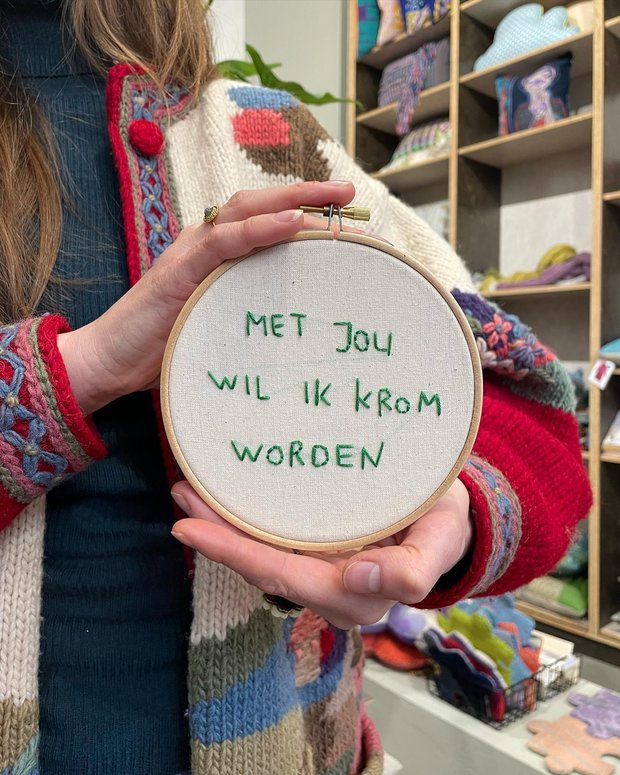
Valentijnsdag bij de Wereldwijven Ateliers
2025
A new beginning
The transition to the Netherlands came with its own difficulties. Before moving, Miwako had the impression - largely influenced by social media - that English would be widely spoken everywhere. In practice, she found that this was mainly true in larger cities. Outside of those areas, knowledge of Dutch becomes more important for daily communication.
Although she intends to learn the language, she points out that migration often happens during stressful life periods. Adjusting to a new environment, dealing with practical matters, and rebuilding stability can make it difficult to focus immediately on language acquisition. Cultural differences also required adjustment. Certain social situations, such as gatherings where people sit in a circle and take turns speaking, felt unfamiliar and sometimes uncomfortable. As someone with autism, being the center of attention in these structured group settings could be particularly challenging.
Another aspect of life in the Netherlands that stood out to her is what she describes as the 'migrant conversation.' Because of her background and appearance, she is frequently asked where she is from, why she moved, and how she experiences living in the Netherlands. While these questions are often well-intentioned, having the same conversation repeatedly can feel tiring. For this reason, she finds it easier to connect with other international people. In those environments, conversations are less focused on origin and more on shared interests and everyday life. It allows her to interact without constantly being positioned as 'the outsider.'
At the same time, Miwako has observed differences in how migrants are perceived. In conversations about migration, she has noticed that negative stereotypes are often directed toward people of color. This makes her uncomfortable, as she relates to the broader experience of living abroad and adapting to a new society. However, she also recognizes that she is treated differently. As a Japanese woman, she often encounters positive associations. People express admiration for Japan, its culture, and its food. While this results in a more favorable perception of her, she is aware that this is not the case for everyone.
Today, Miwako is preparing for another major life change. She and her partner are expecting their first child. As she approaches motherhood, she reflects on the aspects of her upbringing she wants to pass on, as well as those she wants to approach differently. She has already incorporated certain Japanese traditions into her home, such as removing shoes at the entrance. At the same time, she is considering how to combine this with aspects of Dutch culture. One important difference for her is communication style. Growing up, she was taught to avoid being a burden and to hold back her opinions. For her child, she wants something different. She hopes to raise him to be open, direct, and able to express himself freely.
With less than three months until the birth, I feel inclined to ask her how that feels. She tells me she is excited, but also scared. There is an innate need in her to be strong in this moment. 'I have to be,' she says. 'It’s more like a necessity, I would say.' She misses her parents, especially now, but also feels surrounded by really good people. There was a time when she felt alone and depressed, which pushed her to leave her home in search of a fresh start and a new environment. Europe has not been easy, and her time in Ireland did not materialize into the safe haven she had hoped for.
'But right now, I don’t feel lonely anymore. Thanks to him (her husband), my Dutch family, and all my friends and good people that I might not even see every single week, I feel really lucky knowing that I’m not alone and have the strength of a whole community. That really keeps me going.'
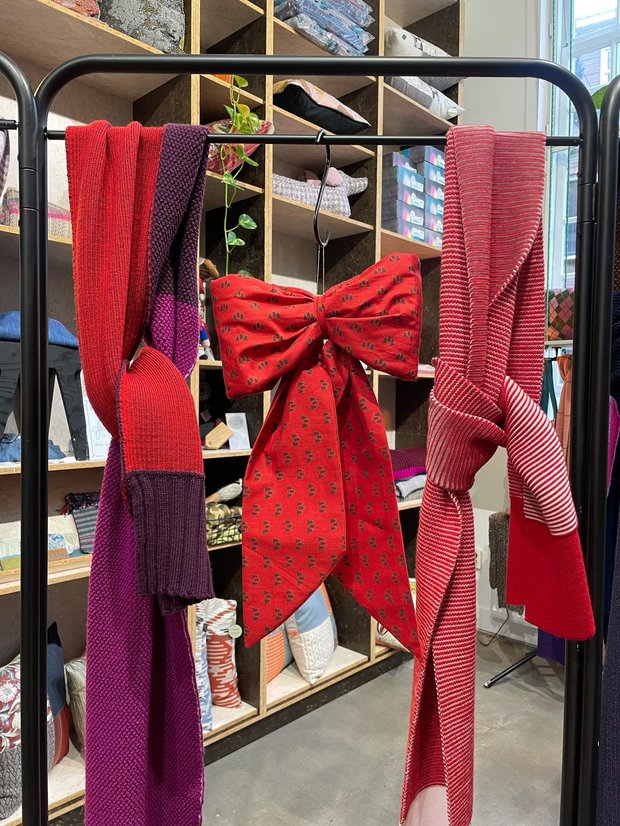
Kerstviering bij de Wereldwijven Ateliers
2025